Life in words
The Pressure to Be Grateful
-When gratitude becomes an expectation.
-Prasantiram
We are often told to be grateful, regardless of the situation.
It is one of the most repeated messages in families, schools, and society. Gratitude is treated as a responsibility, not just an emotion. We are taught to be grateful for our parents, our education, our opportunities, and what we have, even when something does not feel right.
“At least you have a roof over your head.”
“At least your parents did their best.”
“At least things are not worse.”
These statements are often true. But truth is not the only thing that matters in human experience.
Because even when something is good in one way, it can still be difficult in another.
A person can be provided for and still feel unheard. A student can be educated and still feel misunderstood. A child can be cared for and still feel emotionally distant.
But when gratitude is constantly emphasized, there is little space left for anything else.
Over time, people learn to edit their feelings. They begin to compare their pain with someone else’s situation instead of understanding it on its own terms. They start believing that if they are grateful, they should not complain. And if they should not complain, they should not question.
This is where gratitude becomes complicated.
Not because it is wrong—but because it is sometimes used as a conclusion instead of a starting point.
Gratitude is a positive value. It is taught early in life and reinforced through family, education, and social expectations. People are encouraged to recognize what they have rather than focus only on what they lack. In most contexts, gratitude is seen as a sign of emotional maturity and awareness.
But somewhere along the way, gratitude can stop being a feeling and start becoming an expectation.
“At least be grateful.”
It is a phrase many people grow up hearing. It may be said with good intention—as advice, correction, or concern. It is meant to remind people of what they have.
But its effect can be different from its intention.
Once gratitude becomes a response to discomfort, it can begin to replace understanding.
A person may stop expressing what they feel, not because their experience has changed, but because they already know what the response will be.
Over time, this creates a quiet shift. Feelings are filtered before they are spoken. Experiences are compared before they are acknowledged. And honesty becomes harder to express without guilt attached to it.
The pressure to be grateful does not always deny reality. Instead, it reframes it.
It suggests that if something good exists in a situation, then everything else should be minimized. If support was provided,then discomfort should be reduced if help was given ,then questioning it should feel inappropriate.
But human experience is not that simple.
A person can be supported and still feel unheard. They can be provided for and still feel emotionally distant.
They can receive help and still feel unseen in the process.
Gratitude does not cancel complexity. But pressure often tries to simplify it.
This expectation can appear subtly during conversations and conflicts. When someone expresses discomfort or dissatisfaction, the response is often immediate: “You should be grateful.”
The statement itself may not be harmful in intent. It may come from concern or practicality. It may be intended to remind a person of stability, support, or privilege.
However, when gratitude is used to answer discomfort, the difficult conversation can end before it begins.
A person may stop expressing what they feel, not because the feeling has disappeared, but because they are aware of the response they will receive.
Over time, they may begin measuring their pain against what they are supposed to feel grateful for.Instead of asking whether something feels right or wrong, they begin asking whether they are allowed to feel this way at all.
This creates an internal conflict that is not always visible.
On the outside, a person may appear thankful and composed. On the inside, they may be questioning their own response, unsure whether their feelings are valid or excessive.
In this way, gratitude can slowly shift from something that connects people to something that silences certain parts of their experience.This does not mean gratitude is harmful in itself.
It remains an important part of human awareness. The problem is not gratitude itself. The problem is the expectation that gratitude should end further questioning.
Awareness begins when we separate gratitude from silence.
Being grateful does not require denying discomfort.
And acknowledging difficulty does not cancel appreciation.
Both can exist at the same time without invalidating each other.
We can recognize what is good in our lives and still acknowledge what is difficult.
We can appreciate the support we receive and still speak honestly about how an experience affects us.
We can be grateful and still ask questions.
Perhaps this is the balance we need to teach our children—and ourselves.Gratitude should help us recognize what we have, not prevent us from expressing what we feel. It should open our awareness, not close the conversation.
Because when gratitude becomes the final answer, honesty is no longer part of the conversation.
Perhaps the question we need to ask is not, “Are you grateful enough?”
“Have you been given enough space to be honest about what you feel?”
Gratitude should never require us to silence ourselves—or silence someone else.
Maybe true gratitude is not the absence of difficult feelings. Maybe it is the ability to hold appreciation and discomfort in the same heart, without allowing one to erase the other.
So the next time someone says, “You should be grateful,” perhaps we can pause before answering.
Not to count our blessings.when you are grateful you should feel lite from within ,but the conversely it is often heavy and weighing.
So the right question is:
Are we grateful because we truly feel it—or because we have been taught that we are not allowed to feel anything else?
*****

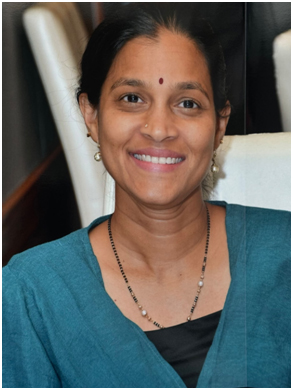
Prasanti is a passionate writer, educator, entrepreneur, and positive discipline counselor. She is the founder of Joy of Learning, a Montessori-inspired school, and the owner of DreamDestinations, specializing in foreign tours and travel. As a curriculum director for charter schools and homeschools, she is dedicated to shaping meaningful learning experiences. Through her journal Life in Words, she explores parenting, childhood, and personal growth. A creative artist and Veena player, she blends tradition, discipline, and creativity into every aspect of her work and life.
Excellent. Right to express is our fundamental right. In the name of gratitude this fundamental right should not be denied. The way you expressed in the article is simply Superb. Glad to know that you are in education field. విద్యాలయం లో మీ లాంటి సరస్వతి ఉండటం మీ విద్యార్థుల అదృష్టం